
Technology at the Core: How DeliverThat Powers Catering Profitability
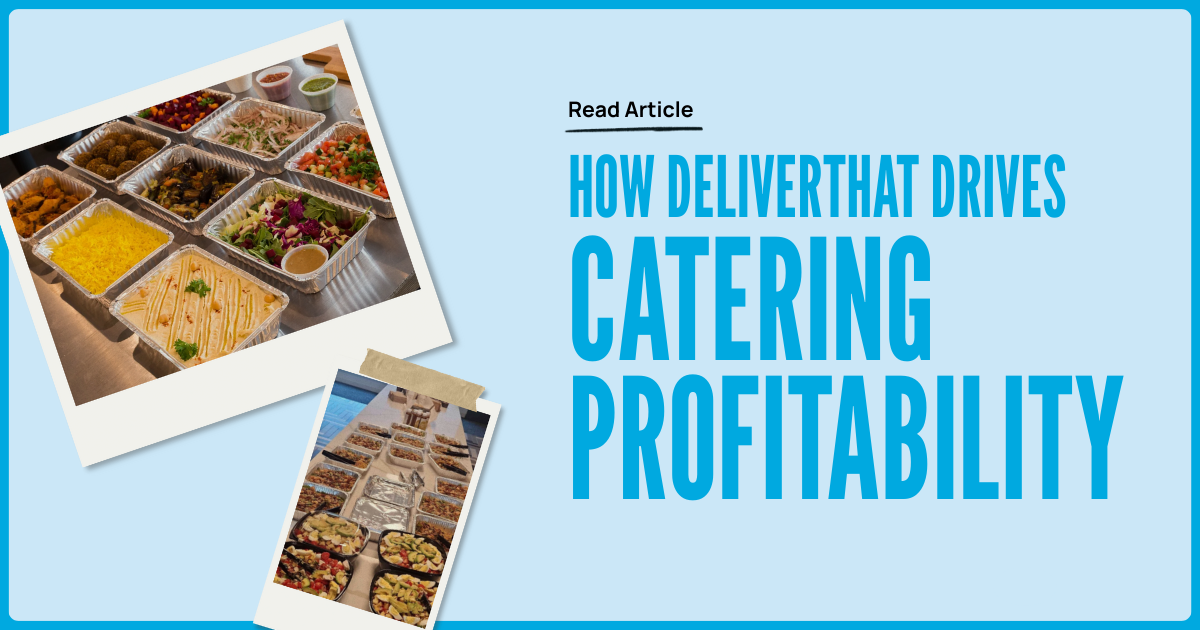
Explore how DeliverThat enhances catering delivery with cutting-edge tech. Discover scalable solutions for catering delivery profitability.
Use our nationwide driver fleet or route orders across any DSP, and track every delivery in one dashboard, backed by a team that’s been doing this since 2013. Start with what you need, add what you want, and never get locked in.
See how brands control delivery, get practical advice for growing your catering program, and keep up with what’s changing in restaurant delivery.
6 min read
DeliverThat
:
Published
Updated
You've decided to launch catering delivery. Good move. Off-premise catering is one of the highest-margin revenue channels available to restaurants right now, but it's also one of the easiest to get wrong in ways that quietly damage your brand.
The kitchen work is the part you know. What happens after the food leaves your building is where most first-timers lose control. This guide covers everything from how to package your orders to how to set your driver up for a clean, professional delivery.
How to Start an Off-Premise Catering Program
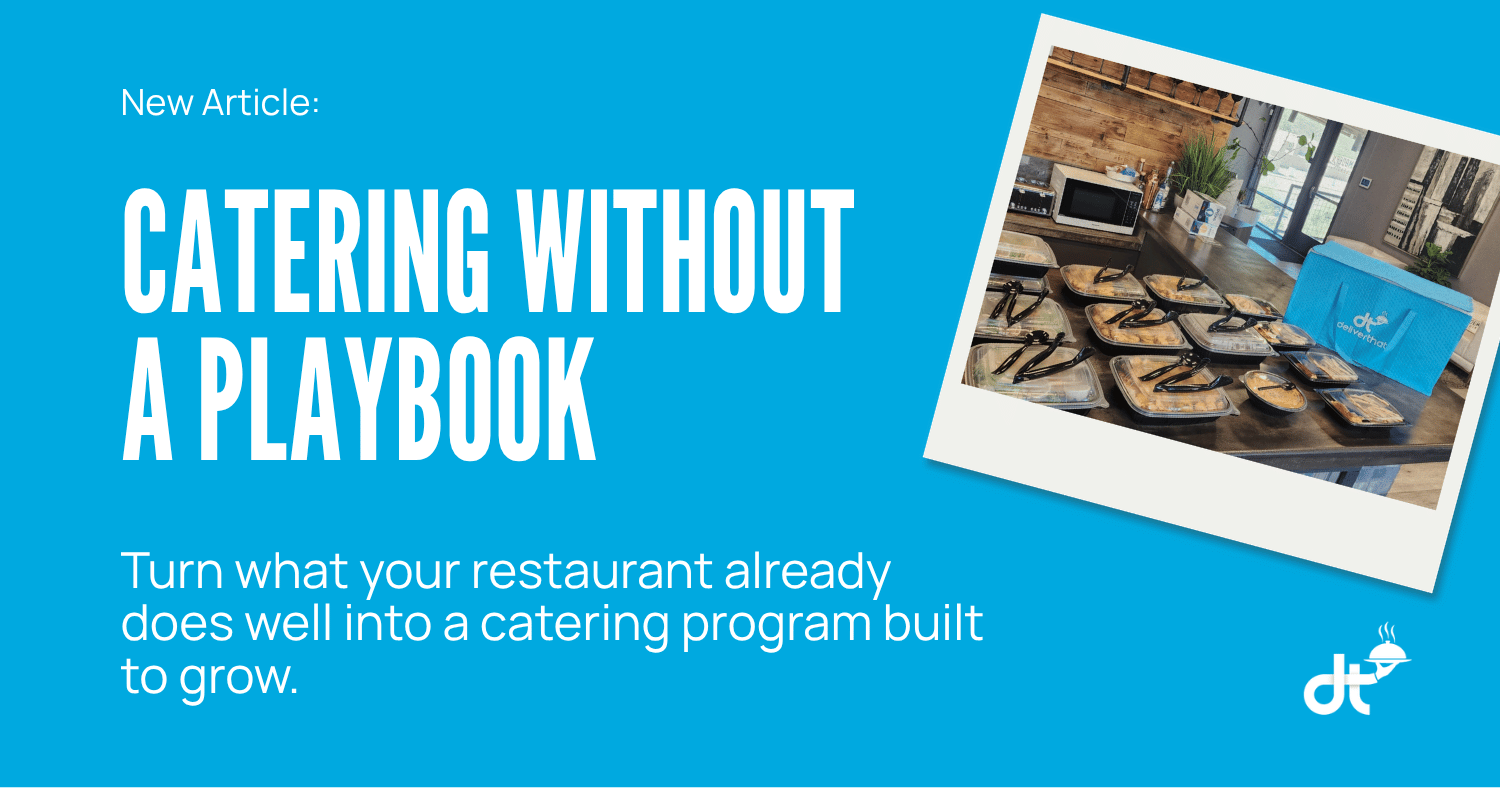
Starting an off-premise delivery program requires five core disciplines: branded packaging, driver preparation, special-order coordination, gratuity strategy, and documented operational standards. Restaurants that get all five right build catering revenue channels that grow through corporate repeat business and word-of-mouth, without depending on dining room capacity or catering marketplaces.
Branded bags or boxes with your logo and colors. Even a simple kraft bag with a custom stamp or label goes a long way.
Branded labels on every container — not just the outer bag. When guests open lids and pass dishes around, they should see your name.
A branded insert or card tucked into the order. A simple "Thank you for choosing [Restaurant Name]" card with your website, social handles, takes thirty seconds to produce and leaves a lasting impression.
Consistent, professional presentation throughout. Every container sealed. Every label facing up. Nothing leaking, nothing loose.
The goal: by the time the driver hands off the order, everyone in that room knows exactly where the food came from.
Your driver is the last person who represents your brand before the guest receives the food. Treating them like a logistics afterthought is one of the most common mistakes new catering operators make.
Wrap anything wet or saucy in plastic wrap before lidding and bagging. Common offenders: soups, dressings, baked beans, braised meats, sauerkraut, gravies. A container that tips during a single turn can ruin the entire order and the driver's vehicle.
Use tamper-evident seals on containers. Guests notice. It signals care and professionalism.
Bag strategically. Heavy items on the bottom. Sauces and liquids flat and stable. Don't overload a single bag.
Keep hot and cold separated. Use insulated bags for hot items.
Water for the chafing pans. Drivers are not expected to find water at a drop-off location.
Matches or a lighter. Every time. It sounds obvious until a driver is standing in a conference room with no way to light a stereo and a group of hungry people watching.
Printed setup instructions. A simple card ("Fill pan halfway with water, light stereo, place food pan on top, serve within 2 hours") eliminates guesswork and sets a professional tone.
Pro Tip: Some guests insist on setting up themselves. By labeling the food and including a setup instruction card — or a QR code linking to a setup video — you're ensuring your brand is protected even when you're not in the room.
Most catering deliveries are straightforward. Some aren't, and those are the ones that can define your reputation with a client. Our support team of delivery experts are available to assist with coordination of all order types.
Catering deliveries that benefit from human support:
Extra large-format — anything requiring multiple vehicles, multiple drivers, or special packaging coordination
VIP or high-stakes events — board meetings, warehouse catering, weddings, athletic teams.
Unusual logistics — loading docks with time windows, buildings with strict delivery policies, events with setup expectations beyond standard drop-off
Not all delivery orders are equally attractive to independent drivers, and this is something most restaurants launching a catering program don't consider until it's already a problem.
A large catering order might involve carrying 80 pounds of equipment across a parking lot, navigating a freight elevator, and setting up in a conference room — all for a flat payout with no guarantee of a tip. If the economics don't work for a driver up front, the order is at risk of not being picked up, or overflowing to a rescue DSP for last-minute delivery. This is the part of catering delivery that guests never see but operators feel immediately.
Yes. Many catering guests genuinely want to tip but don't understand whether that money goes to the kitchen, the driver, or the catering sales team.
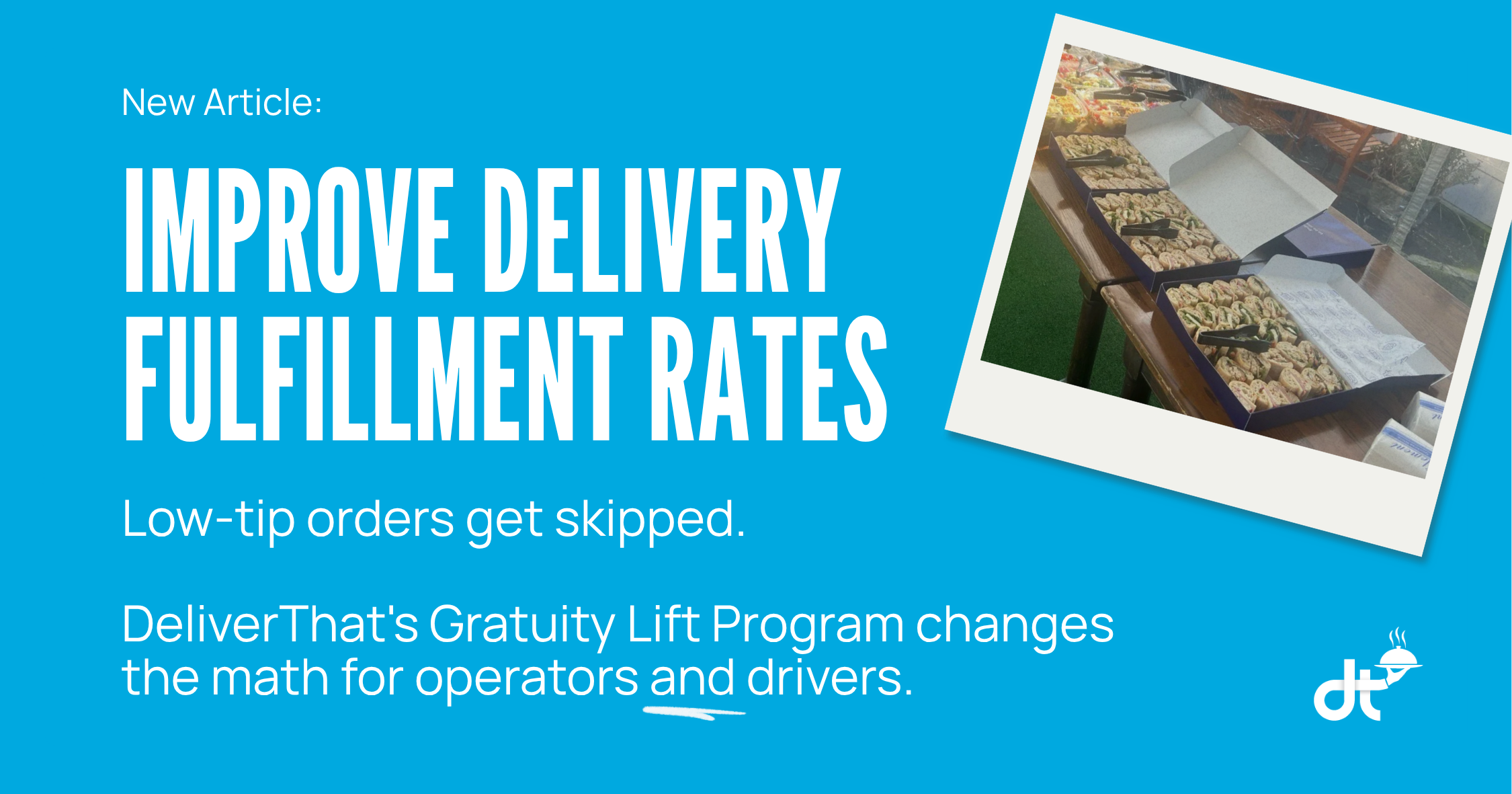
For an independent catering driver, orders without gratuity presents as a lower-than-average estimated earning when reviewing jobs available in the area. Relying on tip-upon-delivery to make your orders attractive to drivers means your reliability is only as good as your guests' habits.
The DeliverThat Gratuity Lift Program allows restaurants to build a guaranteed gratuity into the cost of every catering order, ensuring each delivery is competitive for the independent drivers in the DeliverThat network. Rather than leaving driver compensation to chance, the Gratuity Lift creates a reliable floor — so every order gets picked up on time, by a driver motivated to execute it well.
Before your first live order, pack a order exactly as you would for a a DeliverThat delivery. Ask someone unfamiliar with your menu to transport and set it up. What broke, leaked, or confused them? Fix those things before they happen to a live driver or paying client.
Once you've dialed in your packaging, driver instructions, and setup protocols, write it down. Train every kitchen team member who touches catering orders to the same standard.
Catering guests often don't know what they're missing until they're standing in front of a group without it. Make an SOP for the catering sales team to always offer inclusions or upsells of utensils, plates, serving spoons, condiment packs, napkins. Build these into your order flow or prompt for them at checkout.
Off-premise catering done well is a sustainable source of revenue for your restaurant. It expands your reach beyond your four walls, builds relationships with corporate clients who order repeatedly, and creates revenue streams that don't depend on dining room capacity.
The difference between catering delivery programs that thrive and ones that stall is almost always execution, not the food. Get the packaging right. Set your drivers up to succeed. Communicate clearly with your delivery partner. And don't leave gratuity to chance.
If you're ready to start or scale your catering delivery program, DeliverThat's team is here to help.
What is off-premise catering delivery? Off-premise catering is the service of transporting a restaurant-prepared catering order to a guest location — such as an office, event venue, or private home — where it will be served or set up by the driver or recipient rather than restaurant staff. Unlike standard on-demand food delivery, catering orders often involve multiple items, setup equipment, and higher expectations for presentation.
How should restaurants package catering orders for delivery? Restaurants should wrap wet or saucy items in plastic wrap before lidding, use tamper-evident seals on all containers, bag heavy items on the bottom. Common spill offenders — soups, dressings, baked beans, and braised meats — should always be wrapped and secured flat before loading. Branded boxes and bags ensure all guests know where the food came from and acts as marketing for the restaurant.
What should be included with an off-premise catering order that has chafing dishes? Any order with chafing dishes and fuel cans should include water for the chafing pans, a lighter or matches for the fuel, and easily referenced setup instructions. Drivers are not responsible for sourcing supplies at the drop-off location, so everything needed for setup should be packed with the order.
Why are some catering orders harder to get picked up than others? Independent drivers evaluate delivery orders based on the total compensation relative to the effort involved. Large catering orders that require heavy lifting, long distances, or on-site setup may not be picked up promptly if the payout doesn't reflect the work. Building a guaranteed gratuity into catering orders through programs like DeliverThat's Gratuity Lift reduces this risk.
What delivery information should be included with a catering order manifest? A catering order manifest should include ANY special instructions for the drop-off location — including building entry codes, parking guidance, loading dock requirements, or floor and room numbers. You can also make this info available to the driver by entering it as Drop-off Notes in the DeliverThat dashboard.
Explore how DeliverThat enhances catering delivery with cutting-edge tech. Discover scalable solutions for catering delivery profitability.
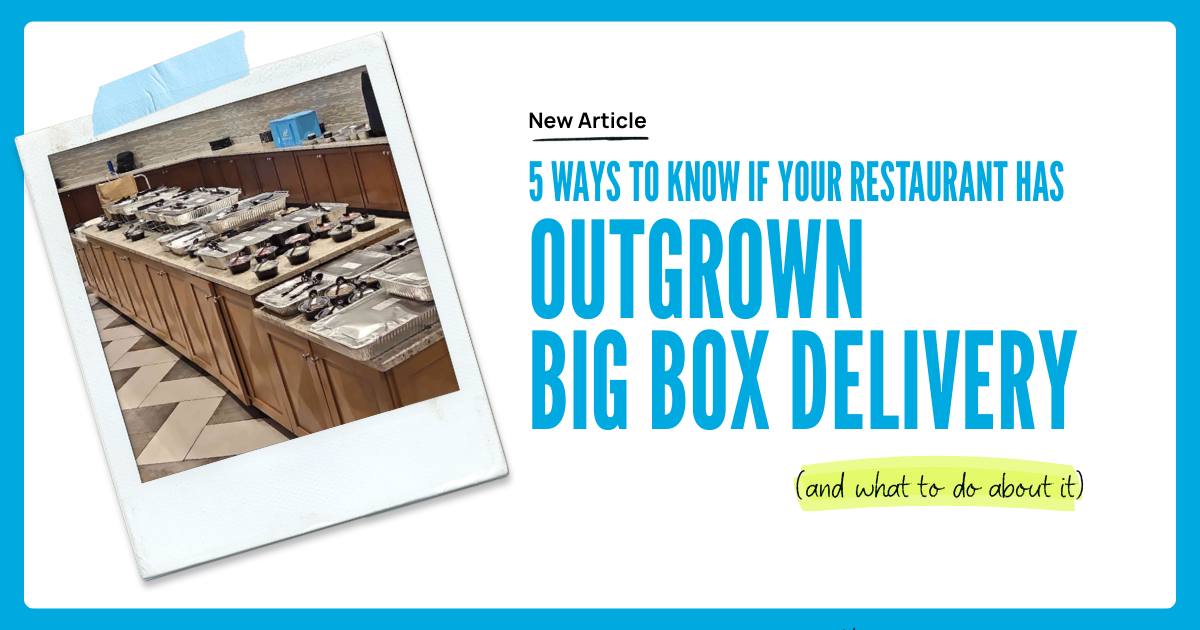
High-value catering orders need more than Big Box delivery. Discover 5 signs it's time to upgrade to professional restaurant delivery that protects...
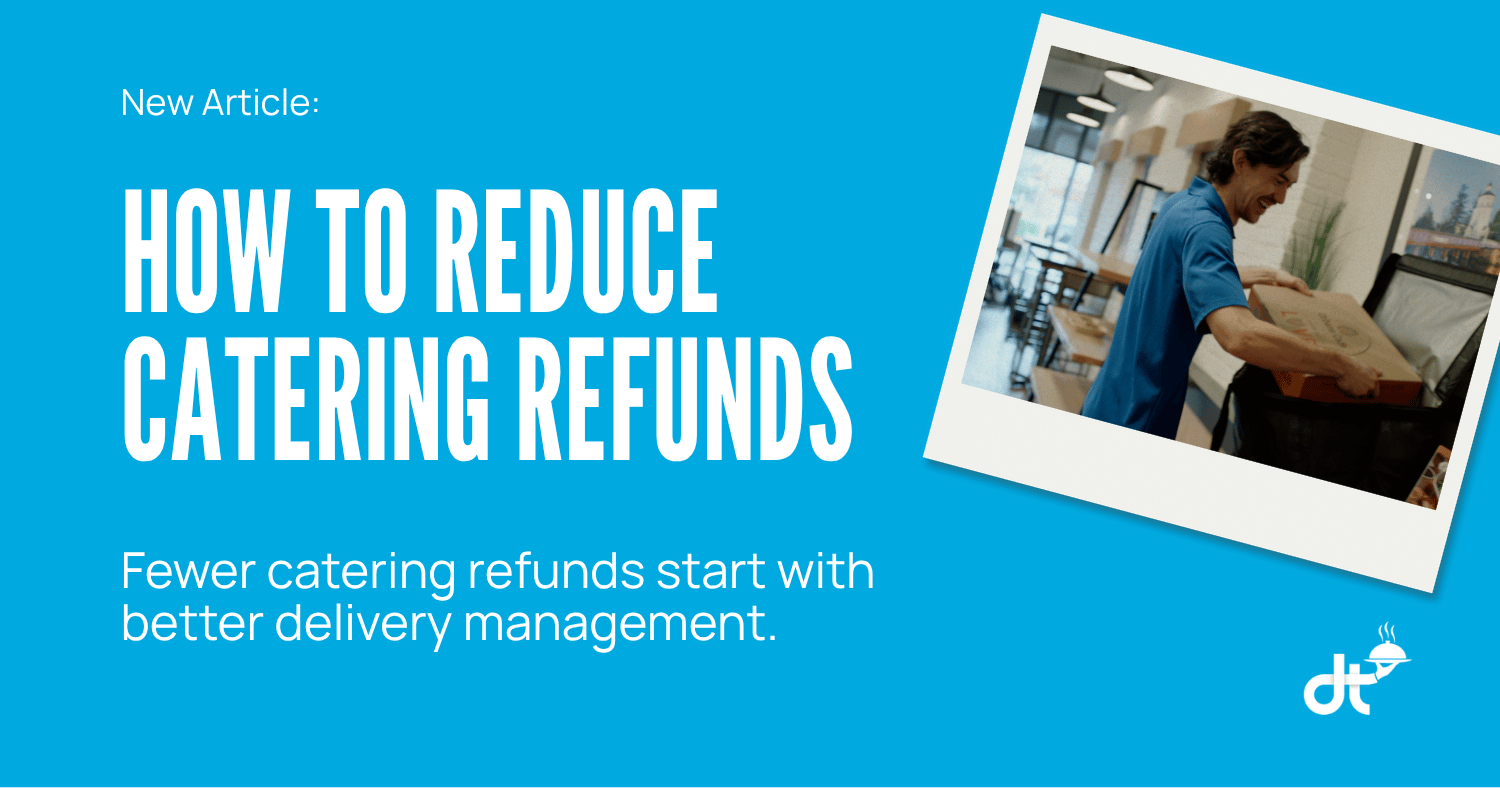
Learn how better restaurant delivery management can reduce refunds by improving handoffs, fulfillment decisions, visibility, and delivery performance.
Learn how to grow a catering business as a franchisee with practical tips for managing operations, delivery, technology, and growth.
One structural gap in how gratuity flows to independent drivers is quietly undermining catering delivery coverage rates. Here's what's happening and...
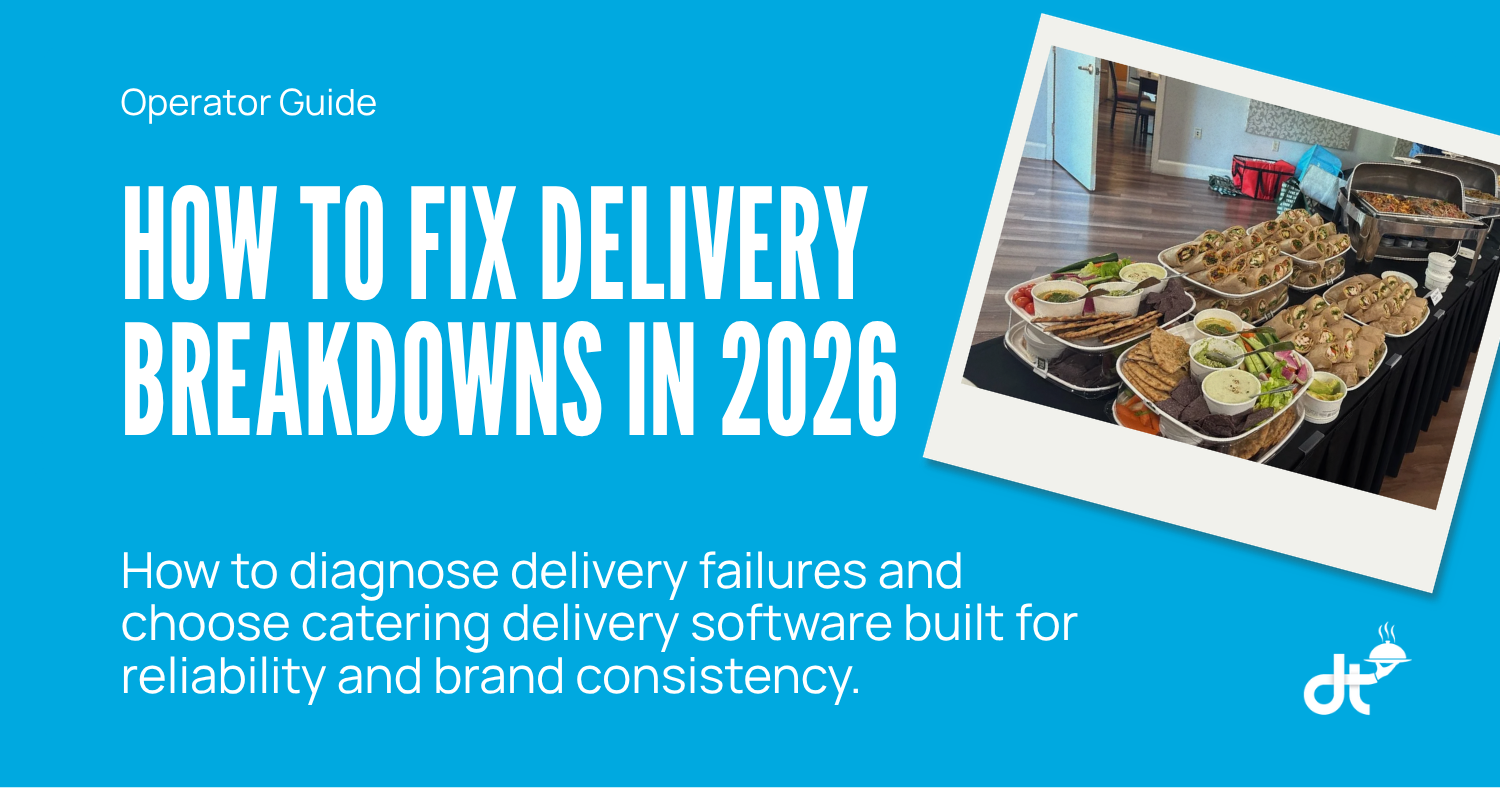
Catering delivery software should stop breakdowns, not just track them. See how to diagnose failures and standardize delivery across every location.